Mostrando entradas con la etiqueta aves. Mostrar todas las entradas

miércoles, 8 de octubre de 2025

Especies de buitres que se encuentran en España / Species of vultures found in Spain

A lo largo de los años, una de las entradas más visitadas de este blog es la titulada Rapaces ibéricas. Completamos ahora la información con esta otra dedicada a las especies de buitres presentes en España. Los buitres son las rapaces diurnas de mayor tamaño. Su vuelo es majestuoso, pero por desgracia el quebrantahuesos y el alimoche están en peligro de extinción en nuestro país.

La ilustración es de SEO/Birdlife y nosotros hemos añadido los rótulos. Clique sobre ella para ampliarla.

Over the years, one of the most popular posts on this blog has been the one entitled Iberian raptors. We are now completing the information with this other post about the species of vultures found in Spain. Vultures are the largest diurnal birds of prey. Their flight is majestic, but unfortunately the bearded vulture and the Egyptian vulture are in danger of extinction in our country.

La ilustración es de SEO/Birdlife y nosotros hemos añadido los rótulos. Click on it to enlarge.

lunes, 2 de junio de 2025

Parques y biodiversidad / Parks and biodiversity

Los carteles siguientes se han fotografiado en un parque de Madrid que no es más grande que Hacienda Riquelme. Son muy ilustrativos de cómo se pueden gestionar las zonas verdes promoviendo la biodiversidad y con menor coste de mantenimiento. Ponemos debajo de cada foto el texto y su traducción.

The following signs have been photographed in a park in Madrid that is no bigger than Hacienda Riquelme. They are very illustrative of how green areas can be managed to promote biodiversity and with lower maintenance costs. We put under each picture the text and its translation.

PRADERA DE SIEGA DIFERENCIADA
DEJAMOS QUE ESTA PRADERA CREZCA Y PRODUZA SEMILLAS.
ASÍ LOS PÁJAROS TENDRÁN COMIDA Y HABRÁ FLORES QUE AYUDARÁN A LOS POLINIZADORES.

DIFFERENTIATED MOWING MEADOW
WE LET THIS MEADOW GROW AND PRODUCE SEEDS.
THIS WAY THE BIRDS WILL HAVE FOOD AND THERE WILL BE FLOWERS THAT WILL HELP POLLINATORS.

ACÚMULO DE ROCAS Y MADERA
CREAMOS ESTE ACÚMULO DE ROCAS Y MADERA MUERTA PARA QUE ANIMALES COMO LAS LAGARTIJAS, LOS INSECTOS O LAS MUSARAÑAS PUEDAN SOBREVIVIR EN LA CIUDAD.

ACCUMULATION OF ROCKS AND WOOD
WE CREATED THIS PILE OF ROCKS AND DEAD WOOD SO THAT ANIMALS SUCH AS LIZARDS, INSECTS AND SHREWS CAN SURVIVE IN THE CITY.

viernes, 31 de enero de 2025

Día Mundial de los Humedales 2025 / World Wetlands Day 2025

Desde 1997, cada 2 de febrero se celebra el Día Mundial de los Humedales. Naciones Unidas dice de ellos lo siguiente (fuente y más información en Naciones Unidas. Día Mundial de los Humedales):

Los humedales son ecosistemas en los que el agua es el principal factor que controla el entorno y la vida vegetal y animal asociada al mismo. Una definición amplia de humedales incluye los ecosistemas de agua dulce, los marinos y los costeros, como los lagos y ríos, los acuíferos subterráneos, los pantanos y marismas, los pastizales húmedos, las turberas, los oasis, los estuarios, los deltas y las marismas, los manglares y otras zonas costeras, los arrecifes de coral y todos los lugares creados por el hombre, como los estanques de peces, los arrozales, los embalses y las salinas.

Representan uno de los ecosistemas más valiosos de la Tierra, indispensables para los seres humanos y la naturaleza por los beneficios y servicios que proporcionan.

A pesar de que sólo cubren alrededor de 6% de la superficie terrestre, son el hábitat del 40% de todas las especies de plantas y animales. Su diversidad biológica es crucial para la salud humana, el suministro de alimentos, el transporte y las actividades económicas que generan empleo, como la pesca y el turismo.Los humedales son vitales para los seres humanos, para otros ecosistemas y para nuestro clima, proporcionando servicios ecosistémicos esenciales como la regulación del agua, incluyendo el control de las inundaciones y la purificación del agua. Más de 1000 millones de personas (una octava parte de la población terrestre) que viven en zonas rurales y urbanas de todo el mundo dependen de los humedales como medio de subsistencia.
Since 1997, World Wetlands Day is celebrated every February 2. United Nations say the following about them (source and more info at United Nations. World Wetlands Day):

Wetlands are ecosystems where water is the primary factor controlling the environment and the associated plant and animal life. A broad definition of wetlands includes both freshwater and marine and coastal ecosystems such as all lakes and rivers, underground aquifers, swamps and marshes, wet grasslands, peatlands, oases, estuaries, deltas and tidal flats, mangroves and other coastal areas, coral reefs, and all human-made sites such as fishponds, rice paddies, reservoirs and saltpans.

These lands are critical to people and nature, given the intrinsic value of these ecosystems, and their benefits and services, including their environmental, climate, ecological, social, economic, scientific, educational, cultural, recreational and aesthetic contributions to sustainable development and human wellbeing.

Though they cover only around 6 per cent of the Earth’s land surface, 40 per cent of all plant and animal species live or breed in wetlands. Wetland biodiversity matters for our health, our food supply, for tourism and for jobs. Wetlands are vital for humans, for other ecosystems and for our climate, providing essential ecosystem services such as water regulation, including flood control and water purification. More than a billion people across the world depend on wetlands for their livelihoods – that’s about one in eight people on Earth.

martes, 15 de octubre de 2024

La biodiversidad perdida / The lost biodiversity

Las tablas siguientes resumen las observaciones de aves en el resort. La mayoría las realizó nuestro vecino John Girdley antes de 2014. Si para leer el contenido de las tablas las descarga (clic derecho) verá que hasta 96 especies de aves fueron avistadas en el resort, con mayor o menor asiduidad y en diferentes estaciones. Si es amante de la naturaleza y repite ahora las observaciones seguramente sentirá la misma frustración que nosotros ¿Lograremos que algún día Hacienda Riquelme vuelva a ser el gran resort que una vez fue? 😥

Un archivo xls con la información de las tablas se puede descargar aquí.

The following tables summarize the bird observations at the resort. Most were done by our neighbor John Girdley prior to 2014. If you download them (right click) you will see that up to 96 species of birds were watched at the resort, with greater or lesser frequency and in different seasons. If you are a nature lover and repeat the observations now, you will surely feel the same frustration as we do. Will we ever get Hacienda Riquelme back to the great resort it once was? 😥

A xls file with the information of the tables can be downloaded here.

jueves, 19 de septiembre de 2024

Día de las aves 2024 / Bird Day 2024

El Servicio de Información y Dinamización en la red de los Espacios Protegidos de la Región de Murcia ha publicado el siguiente mensaje:

Como todos los años, celebramos el Día de las Aves el primer fin de semana de octubre, momento en el que millones de aves migratorias se desplazan hacia sus lugares de invernada.

Este año, SEO/BirdLife, el organismo que promueve la celebración desde 1987, quiere continuar invitándonos a participar conociendo el mundo de las aves y las amenazas a las que se enfrentan, y además, aprovechar su 70 aniversario como entidad referente en la conservación de las aves para agradecer a todas las personas su apoyo y compromiso con la conservación de la naturaleza.

En la siguiente imagen puedes ver el calendario con las actividades y haciendo clic sobre el enlace puedes descargarte el dossier para inscribirte.

Clic sobre la imagen para ampliarla y clic aquí para descargar el programa de actividades completo.
Click on the image to enlarge and click here to download the full program of activities.

The Information and Promotion Service in the network of Protected Areas of the Region of Murcia has published the following message:

As every year, we celebrate Bird Day the first weekend of October, a time when millions of migratory birds move to their wintering sites.

This year, SEO/BirdLife, the organization that promotes the celebration since 1987, wants to continue inviting us to participate by learning about the world of birds and the threats they face, and also to take advantage of its 70th anniversary as a reference entity in the conservation of birds to thank everyone for their support and commitment to the conservation of nature.

In the image above you can see the calendar with the activities and by clicking on the link you can download the dossier to register.

viernes, 9 de agosto de 2024

La biodiversidad en Hacienda Riquelme / The biodiversity at Hacienda Riquelme

Durante bastantes años, Hacienda Riquelme se caracterizó por tener una rica biodiversidad. En el resort se podían ver mamíferos como el erizo de tierra y la ardilla, reptiles como el lagarto ocelado y lagartijas, insectos como las polillas, de gran importancia en los ecosistemas, y sobre todo muchas aves.

En los últimos años, la variedad de especies que nos visitan, e incluso se reproducen aquí, ha caído en picado. La disminución y variabilidad del nivel de agua de los lagos, la escasez general de agua y la presencia excesiva de gatos han contribuido a ello. Pero sobre todo lo ha hecho el deterioro de la jardinería, manifestado en la supresión de zonas de vegetación silvestre, el uso sistemático de piedras como solución para cubrir superficies que antes eran de césped, disminución de arbustos y árboles, podados discutibles, uso de insecticidas, etc.

Mostramos a continuación una pequeña selección de fotos y vídeos disponibles en este blog (hay muchos más). Sirvan como recordatorio de la que fue Hacienda Riquelme y de lo que podría volver a ser.

For many years, Hacienda Riquelme was characterized by its rich biodiversity. At the resort you could see mammals as the hedgehog and the squirrel, reptiles as lizards and ocellated lizard, insects as moths, of great importance in the ecosystems, and above all many birds.

In recent years, the variety of species that visit us, and even breed here, has plummeted. The decline and variability of lake water levels, general water shortages, and the excessive presence of cats have contributed to this. But above all, the deterioration of the landscaping, manifested in the suppression of areas of wild vegetation, the systematic use of stones as a solution to cover surfaces that were once lawns, the reduction of shrubs and trees, questionable pruning, the use of insecticides, etc., has contributed to this.

Below is a small selection of photos and videos available on this blog (there are many more). They serve as a reminder of what Hacienda Riquelme used to be and what it could be again.

Cormorants are the most frequent big birds in Hacienda Riquelme during the winter. Photo: enero 2015.
Los cormoranes son las grandes aves más frecuentes en Hacienda Riquelme durante el invierno. Foto: January, 2015.
A flock of 53 Cattle Egret on the big lake in the morning on February 14th, 2018. This is by far the largest group seen at HR. Photo by John Girdley.
Una bandada de 53 garcillas bueyeras en el lago grande en la mañana del 14 de febrero de 2018. Es con mucho el mayor grupo visto en HR. Foto de John Girdley.
Spotless Starlings (September 2017) / Estorninos negros (Septiembre 2017)
Carlitos, nuestro cisne negro en el hoyo 11. Grabado por Carlos Rebollo el 10 de febrero de 2020. Carlitos se electrocutó el 25 de mayo de 2020 al tropezar con unos cables eléctricos situados junto a la vía del tren
Carlitos, our Black Swan, at the 11th hole. Shot by Carlos Rebollo on February 10, 2020. Carlitos became electrocuted on May 25, 2020, when he tripped over electrical cables located next to the train track

Una ánade azulón y sus patitos. Grabado por Carlos Rebollo cerca del hoyo 16 el 5 de mayo, 2020.
A mallard and its chicks. Shot by Carlos Rebollo near 16th hole on May 5th, 2020.

Erizo de tierra. Grabación de Carmen Franco el 21 de diciembre de 2021 cerca de Atlántico 200.
Hedgehog recorded by Carmen Franco on December 21, 2021 near 200 Atlántico Street.

miércoles, 22 de mayo de 2024

Alas del humedal / Wetland wings

Los amantes de las aves y el medio ambiente pueden ver una exposición de fotografía sobre las fauna que habita en los humedales, en el Parque Regional Salinas y Arenales de San Pedro del Pinatar y en los márgenes del Mar Menor. Las fotos resaltan la importancia de estas aves, algunas de ellas esquivas y difíciles de observar, y pretenden concienciar sobre la riqueza de nuestro patrimonio natural.

Cuándo: del 22 de mayo al 1 de junio, 2024
Dónde: Casa de la Cultura. San Pedro del Pinatar

Lovers of birds and the environment can see a photography exhibition on the fauna that inhabits the wetlands, in the Regional Park Salinas and Arenales de San Pedro del Pinatar and on the banks of the Mar Menor. The photos highlight the importance of these birds, some of them elusive and difficult to watch, and aims to raise awareness of the richness of our natural heritage.

When: from May 22 to June 1, 2024
Where: Casa de la Cultura. San Pedro del Pinatar

Entradas relacionadas / Related posts
Fauna del Parque Regional de San Pedro del Pinatar / Fauna of San Pedro del Pinar Regional Park
Vídeos del Parque Regional de San Pedro del Pinatar / Videos about San Pedro del Pinar Regional Park
Turismo ornitológico: en busca de las aves / Ornithological tourism: in search of birds
Espacios naturales cerca de Hacienda Riquelme / Natural areas near Hacienda Riquelme
Espacios Naturales Protegidos de la Región de Murcia / Protected Natural Areas of Region of Murcia

Haga clic en una imagen para ampliarla / Click on any image to enlarge it

sábado, 11 de febrero de 2023

Día Mundial de los humedales 2023 / World Wetlands Day 2023

Desde 1997, cada 2 de febrero se celebra el Día Mundial de los Humedales. Naciones Unidas dice de ellos lo siguiente (fuente y más información en Naciones Unidas. Día Mundial de los Humedales):

Los humedales son ecosistemas en los que el agua es el principal factor que controla el entorno y la vida vegetal y animal asociada al mismo. Una definición amplia de humedales incluye los ecosistemas de agua dulce, los marinos y los costeros, como los lagos y ríos, los acuíferos subterráneos, los pantanos y marismas, los pastizales húmedos, las turberas, los oasis, los estuarios, los deltas y las marismas, los manglares y otras zonas costeras, los arrecifes de coral y todos los lugares creados por el hombre, como los estanques de peces, los arrozales, los embalses y las salinas.

Representan uno de los ecosistemas más valiosos de la Tierra, indispensables para los seres humanos y la naturaleza por los beneficios y servicios que proporcionan.

A pesar de que sólo cubren alrededor de 6% de la superficie terrestre, son el hábitat del 40% de todas las especies de plantas y animales. Su diversidad biológica es crucial para la salud humana, el suministro de alimentos, el transporte y las actividades económicas que generan empleo, como la pesca y el turismo.Los humedales son vitales para los seres humanos, para otros ecosistemas y para nuestro clima, proporcionando servicios ecosistémicos esenciales como la regulación del agua, incluyendo el control de las inundaciones y la purificación del agua. Más de 1000 millones de personas (una octava parte de la población terrestre) que viven en zonas rurales y urbanas de todo el mundo dependen de los humedales como medio de subsistencia.

SEO Birdlife (Sociendad Española de Ornitología) nos propone el siguiente juego: ¿Cuántas de estas aves acuáticas identificas en la imagen? Bastantes de ellas se han visto en los lagos de Hacienda Riquelme. La solución al final de esta entrada.

SEO Birdlife (Sociendad Española de Ornitología) proposes the following quiz: How many of these waterfowls can you identify in the image? Quite a few of them have been seen in the lakes of Hacienda Riquelme. The solution at the end of this post.

Since 1997, World Wetlands Day is celebrated every February 2. United Nations say the following about them (source and more info at United Nations. World Wetlands Day):

Wetlands are ecosystems where water is the primary factor controlling the environment and the associated plant and animal life. A broad definition of wetlands includes both freshwater and marine and coastal ecosystems such as all lakes and rivers, underground aquifers, swamps and marshes, wet grasslands, peatlands, oases, estuaries, deltas and tidal flats, mangroves and other coastal areas, coral reefs, and all human-made sites such as fishponds, rice paddies, reservoirs and saltpans.

These lands are critical to people and nature, given the intrinsic value of these ecosystems, and their benefits and services, including their environmental, climate, ecological, social, economic, scientific, educational, cultural, recreational and aesthetic contributions to sustainable development and human wellbeing.

Though they cover only around 6 per cent of the Earth’s land surface, 40 per cent of all plant and animal species live or breed in wetlands. Wetland biodiversity matters for our health, our food supply, for tourism and for jobs. Wetlands are vital for humans, for other ecosystems and for our climate, providing essential ecosystem services such as water regulation, including flood control and water purification. More than a billion people across the world depend on wetlands for their livelihoods – that’s about one in eight people on Earth.
Los lagos del campo de golf son pequeños pero importantes humedales. Foto de Carmen Franco, 11 de febrero, 2023.
The lakes of the golf course are small but important wetlands. Photo by Carmen Franco, February 11, 2023.

Entradas relacionadas recientes / Recent related posts
Guía de las AVES COMUNES de España / Guide to the COMMON BIRDS of Spain
Las aves de la Región de Murcia / The birds of Region de Murcia
What are the birds for? / ¿Para qué sirven las aves?
Estorninos negros / Spotless Starlings

Solución al juego/ Solution for thr quiz
  1. Silbón europeo / Eurasian wigeon
  2. Ánade friso / Gadwall
  3. Ánade azulón / Mallard
  4. Cerceta común / Common teal
  5. Ánade rabudo / Northern pintail
  6. Porrón moñudo / Tufted duck
  7. Porrón europeo / Common pochard
  8. Porrón pardo / Ferruginous duck
  9. Pato colorado / Red-crested pochard
  10. Garza real / Grey heron
  11. Garza imperial / Purple heron
  12. Focha común / Eurasian coot
  13. --
  14. Somormujo blanco / Great crested grebe
  15. Zampullín común / Little grebe
  16. Avetorillo común / Little bittern
  17. Rascón europeo / Water rail
  18. Calamón común / Purple gallinule (or purple swamp-hen)

jueves, 15 de diciembre de 2022

Guía de las AVES COMUNES de España / Guide to the COMMON BIRDS of Spain

SEO BirdLife ha editado una sencilla pero muy útil guía para los aficionados a las aves, sobre todo si son principiantes. Es ideal para visualizar en su tablet. Puede descargarla desde el enlace que hay más abajo.

SEO BirdLife has published a simple but very useful guide for bird watchers, especially if they are beginners. It is ideal for viewing on your tablet. You can download it from the link below.

Entradas relacionadas / Related posts
Guía de Aves de España / Guide to the Birds of Spain
Las aves de la Región de Murcia / The birds of Region de Murcia
Las aves en Hacienda Riquelme a través de los años / Birds in Hacienda Riquelme through the years
Gardens and birds in Hacienda Riquelme / Jardines y aves en Hacienda Riquelme
Rapaces ibéricas / Iberian raptors
SEO/BirdLife

martes, 6 de diciembre de 2022

Las aves de la Región de Murcia / The birds of Region de Murcia

En 2006, la Consejería de Industria y Medio Ambiente publicó tres guías sobre las aves de la Región de Murcia. Escritas por destacados especialistas, no han pérdido interés y utilidad a pesar del tiempo transcurrido. Se pueden descargar libremente desde los siguientes enlaces:

In 2006, the Consejería de Industria y Medio Ambiente (Industry and Environment) published three guides about birds in the Region of Murcia. They were written by leading specialists and keep interest and usefulness despite of elapsed time. They can be freely downloaded from the following links:

Guía Básica de las Aves de la Región de Murcia
Rapaces diurnas y nocturnas de la Región de Murcia
Guía de Aves Acuáticas del Mar Menor

Clic para ampliar. Clic derecho para descargar / Click to enlarge. Right click to download

miércoles, 16 de noviembre de 2022

What are the birds for? / ¿Para qué sirven las aves?

SEO Birdlife (Spanish Society of Ornithology) is the oldest nature conservationist NGO in Spain. It has recently sent a newsletter to its members and supporters. Given the great loss of biodiversity suffered in recent years in the resort, we believe it is worth making it known to residents and managers of Hacienda Riquelme. We reproduce it below.

We do not value enough the gift that is the song of the birds. An European research from the University of Kiel in Germany has shown that the more birds we see and hear, the more satisfaction we feel with life.

What they give us, in reality, goes much further. The ecosystem services offered by nature in general and to which birds contribute, make human life possible on the planet as we know it. To mention just a few:
  • 🌾 Scatter the seeds: some of our forests would not be what they are today without the help of long-distance tree fruits scattering.
  • 🦟 Provide biological pest control: during the breeding season, birds of prey feed on large numbers of rodents that affect agricultural crops; martins, swallows and swifts ate millions of flies and mosquitoes.
  • ❄️ They help regulate the climate: Several studies indicate that seabirds could be helping to delay the warming of the Arctic.
  • 🌱 They favour pollination: bees, birds and bats contribute to 35% of global agricultural production, raising the production of around 75% of the world's main food crops.

However, and although the list of benefits is much longer, the birds do not receive the care they need to survive: one in four bird species in Spain is threatened. Their disappearance are the result of human activity. Are we going to allow this terrible decline to continue advancing? We must really act, we cannot continue losing birds, and with them biodiversity, nature and quality of life.

SEO/BirdLife works to guarantee the conservation of birds because we understand that without them and their habitats it is impossible to conceive of life on our planet. It is not an easy task: on the other side there are economic powers with interests too far removed from what nature needs.

Grey Heron / Garza real

SEO Birdlife (Sociedad Española de Ornitología) es la ONG de conservación de la naturaleza más antigua de España. Recientemente ha enviado una circular a sus socios y simpatizantes. Dado la gran pérdida de biodiversidad sufrida en los últimos años en el resort, creemos que vale la pena dársela a conocer a los vecinos y gestores de Hacienda Riquelme. La reproducimos a continuación.

No valoramos lo suficiente el regalo que supone el canto de las aves. Una investigación europea de la Universidad de Kiel, en Alemania, ha demostrado que cuantas más aves vemos y escuchamos, mayor satisfacción vital sentimos.

Lo que nos dan, en realidad, va mucho más allá. Los servicios ecosistémicos que ofrece la naturaleza en general y a los que contribuyen las aves, hacen posible la vida humana en el planeta tal y como la conocemos. Por mencionar solo algunos:
  • 🌾 Dispersan las semillas: algunos de nuestros bosques no serían lo que son hoy día sin la ayuda de la dispersión de los frutos de los árboles a larga distancia.
  • 🦟 Suponen un control biológico de plagas: durante la época de cría, las aves rapaces se alimentan de grandes cantidades de roedores que afectan a los cultivos agrícolas; los aviones, golondrinas y vencejos consumen millones de moscas y mosquitos.
  • ❄️ Ayudan a regular el clima: diversos estudios señalan que las aves marinas podrían estar ayudando a retrasar el calentamiento del Ártico.
  • 🌱 Favorecen la polinización: las abejas, los pájaros y los murciélagos inciden en el 35 % de la producción agrícola mundial, elevando la producción de alrededor del 75% de los principales cultivos alimentarios de todo el mundo. 

Sin embargo, y aunque la lista de beneficios es mucho más larga, las aves no reciben el cuidado que necesitan para sobrevivir: una de cada cuatro especies de aves en España está amenazada.Todos los problemas que las empujan a su desaparición son fruto de la actividad humana ¿Vamos a permitir que siga avanzando este terrible declive? Hay que actuar de verdad, no podemos seguir perdiendo aves, y con ellas biodiversidad, naturaleza y calidad de vida.

En SEO/BirdLife trabajamos para garantizar la conservación de las aves porque entendemos que sin ellas y sus hábitats es imposible concebir la vida en nuestro planeta. No es una tarea fácil: al otro lado hay poderes económicos con intereses demasiado alejados de lo que la naturaleza necesita.

Purple Swamp-hen / Calamón

Most recent posts about birds / Entradas más recientes sobre aves
Las aves en Hacienda Riquelme a través de los años / Birds in Hacienda Riquelme through the years
Una bandada de porrones europeos en el resort / A flock of European Pochard in the resort
Un cormorán en el lago grande / A cormorant in the big lake
Estorninos negros / Spotless Starlings
Un gavilán comiendo un estornino / A Sparrowhawk eating a Spotless Starling
Gardens and birds in Hacienda Riquelme / Jardines y aves en Hacienda Riquelme

viernes, 7 de octubre de 2022

Gardens and birds in Hacienda Riquelme / Jardines y aves en Hacienda Riquelme

For many years we have studied and enjoyed the ornithological wealth of this resort. But that wealth belongs to past times. The variety of bird species seen at Hacienda Riquelme has plummeted. With the decrease of plant species, the pruning of flowering plants, frequent and massive fumigations, the elimination of wild areas and the introduction of plastic and stone areas, the decline of bird and insect species was inevitable and reflects the environmental damage caused by the ongoing awful management of gardening.

Below you can see the 84 species of birds identified at Hacienda Riquelme up to November 2015 by our neighbour and naturalist John Girdley. How many can be seen now?

Durante muchos años hemos estudiado y disfrutado de la riqueza ornitológica de este resort. Pero esa riqueza pertenece a tiempos pasados. La variedad de aves vistas en Hacienda Riquelme se ha desplomado. Con la disminución de especies de plantas, la poda de plantas con flores, fumigaciones frecuentes y masivas, la eliminación de áreas silvestres y la introducción de zonas de plástico y piedra, también la disminución de especies de aves e insectos ha sido inevitable y refleja el daño ambiental causado por la continuada mala gestión de la jardinería.

A continuación puede ver las 84 especies de aves identificadas en Hacienda Riquelme hasta noviembre de 2015 por nuestro vecino y naturalista John Girdley ¿Cuántas se pueden ver ahora?

lunes, 14 de marzo de 2022

Un gavilán comiendo un estornino / A Sparrowhawk eating a Spotless Starling

Esta vez fue nuestro vecino Mario quién nos envió un vídeo (37") sobre la fauna del resort. Lo grabó en la Fase 1 hacia las 18:00. En él se puede ver un gavilán con un pájaro negro, probablemente un estornino, entre sus patas.

This time it was our neighbour Mario who sent us a video (37") about the fauna of the resort. He shot it in Phase 1 around 18:00. You can see a Sparrowhawk with a bird, probably a Spotless Starling, between its legs.

Gavilán común / Sparrowhawk (Fuente / Source: https://seo.org)

sábado, 5 de febrero de 2022

Breves historias de animales / Short stories about animals

Falso búho anti palomas / Anti pigeons fake Owl

Cometa anti palomas (8") / Anti Pigeons kite (8")

Una ardilla en la Fase 5 (6") / A Squirell in Phase 5 (6")

Atasco en la RM-F19, junto al resort (6") / Traffic jam on the RM-F19, next to the resort (6")

miércoles, 26 de enero de 2022

Estorninos negros / Spotless Starlings

Hacienda Riquelme es un buen lugar para observar aves. Los estorninos negros son especialmente abundantes en el resort y no es raro ver bandadas de miles de ellos haciendo espectaculares acrobacias. Un ejemplo es este vídeo (44") grabado por nuestra vecina Carmen, que ha tenido la amabilidad de enviarnos.

Hacienda Riquelme is a good place for birdwatching. Spotless starlings are especially abundant in the resort and you can often see huge flocks doing spectacular acrobatics (murmuring). An example is this video (44") shot by our neighbour Carmen that she has kindly sent us.

Estornino negro / Spotless Starling (Fuente / Source: https://ebird.org)

miércoles, 29 de diciembre de 2021

Las aves en Hacienda Riquelme a través de los años / Birds in Hacienda Riquelme through the years

Desde el principio, Hacienda Riquelme se ha caracterizado por la presencia de muchas especies de aves. Los lagos contribuyen en gran medida a ello. En los últimos años, la variedad de especies que nos visitan en diferentes épocas de año parece haber disminuido. Aún así, la observación de aves sigue siendo un atractivo más del resort.

Mostramos a continuación una pequeña selección de fotos y breves videos obtenidos a lo largo de los años. Haga clic sobre cualquiera para ampliarla.

Since the beginning, Hacienda Riquelme has been characterized by the presence of many species of birds. Lakes contribute greatly to this. In recent years, variety of species that visit us at different seasons seems to have decreased. Still birdwatching remains an extra attraction of the resort.

We show below a small selection of photos and short videos shot over the years. Click on any to enlarge it.

Cormorants are the most frequent big birds in Hacienda Riquelme during the winter. Photo: enero 2015.
Los cormoranes son las grandes aves más frecuentes en Hacienda Riquelme durante el invierno. Foto: January, 2015.
A flock of 53 Cattle Egret on the big lake in the morning on February 14th, 2018. This is by far the largest group seen at HR. Photo by John Girdley.
Una bandada de 53 garcillas bueyeras en el lago grande en la mañana del 14 de febrero de 2018. Es con mucho el mayor grupo visto en HR. Foto de John Girdley.
Spotless Starlings (September 2017) / Estorninos negros (Septiembre 2017)
Carlitos, nuestro cisne negro en el hoyo 11. Grabado por Carlos Rebollo el 10 de febrero de 2020. Carlitos se electrocutó el 25 de mayo de 2020 al tropezar con unos cables eléctricos situados junto a la vía del tren
Carlitos, our Black Swan, at the 11th hole. Shot by Carlos Rebollo on February 10, 2020. Carlitos became electrocuted on May 25, 2020, when he tripped over electrical cables located next to the train track

Una ánade azulón y sus patitos. Grabado por Carlos Rebollo cerca del hoyo 16 el 5 de mayo, 2020.
A mallard and its chicks. Shot by Carlos Rebollo near 16th hole on May 5th, 2020.

Un polluelo de golondrina en el nido y cómo lo alimentan. Grabado por Silvia en junio de 2020.
A swallow chick in the nest and how they feed it. Shot by Silvia on June 2020.

martes, 28 de diciembre de 2021

Una bandada de porrones europeos en el resort / A flock of European Pochard in the resort

Esta mañana tuvimos la grata sorpresa de ver un número inusualmente alto de porrones europeos en el lago situado entre las fases 1 y 2. Había más de 40, y también los residentes habituales, pochas, gallinetas y zampullines. Hacía mucho que no observábamos algo así. Un espectáculo digno de apreciar y difrutar.

This morning we were pleasantly surprised by an unusually high number of European Pochards in the lake between phases 1 and 2. There were more than 40, and also the usual residents, Coots, Moorhens and Little Grebes. It's  a long time since we watched something like this. Worthwile appreciating and enjoying.

Haga clic en la imagen para ampliarla y ver las aves mucho mejor / Click on the photo to enlarge it and see the birds much better

Selección de entradas relacionadas / Selection of related posts
Birds and breakfast (2010)
The Birdlife of Hacienda Riquelme / Las aves de Hacienda Riquelme (2012)
Aves en el campo de golf / Birds on the golf course (2017)
Aves en febrero / Birds in February (2017)
Naturaleza y observación de aves / Nature and birdwatching (Updated in 2018)
Una gallineta y sus polluelos / A moorhen and its chicks (Video, 2020)
Una pata y sus patitos / A mallard and its chicks (Video, 2020)

viernes, 24 de diciembre de 2021

Un cormorán en el lago grande / A cormorant in the big lake

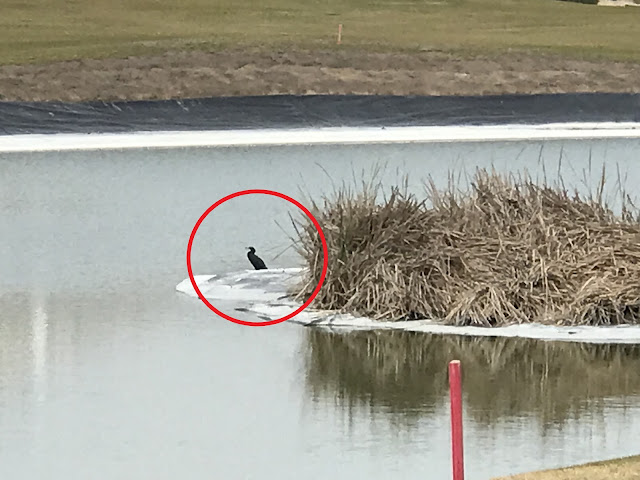
El cormorán es un visitante invernal del resort. A lo largo de los años le hemos dedicado varias entradas y publicado diversas fotos, algunas de ellas espectaculares. En 2021, de momento, solo hemos visto el solitario ejemplar de la siguiente foto.

The cormorant is a winter visitor to the resort. Over the years we have dedicated several posts to it and published various pictures, some of them impressive. In 2021, at the moment, we have only watched the solitary specimen in the photo below.

Otras entradas sobre cormoranes en el resort / Other posts about cormorants in the resort
Cormoranes / Cormorants (2016)
Lakes of Hacienda Riquelme restored / Los lagos de Hacienda Riquelme restaurados (2015)
Cormoranes sobre Hacienda Riquelme / Cormorants over Hacienda Riquelme (2013)
Cormoranes, lagos y campo de golf / Cormorants, lakes and golf course (2013)

sábado, 24 de abril de 2021

Cantos de primavera de las aves / Spring songs of birds

Carlos de Hita es un conocido técnico de sonido, en producción y postproducción, especializado en los sonidos de la naturaleza, actividad por la que ha recibido numerosos premios. El pasado 27 de marzo, publicó en el periódico digital El Confidencial el artículo del que hemos extraído el siguiente vídeo (1' 38"). Más de la mitad las especies que aparecen en él han sido vistas en Hacienda Riquelme y sus alrededores.

Carlos de Hita is a well-known sound technician, in production and post-production, specializing in the sounds of nature, an activity for which he has received numerous awards. On March 27, he published in the online newspaper El Confidencial the article from which we have extracted the following video (1' 38"). Over half of the species that appear in it have been seen in Hacienda Riquelme and nearby.

Enlaces relacionados / Related links
El Confidencial. Vídeo: este es el canto general de la primavera que nos ofrecen las aves
Carlos de Hita. El sonido de la naturaleza
Carlos de Hita. Canal de Youtube

viernes, 22 de enero de 2021

SEO/BirdLife

En este blog hemos citado muchas veces a SEO/Birdlife (Sociedad Española de Ortinología) pero no le habíamos dedicado una entrada específica, a pesar de admirar la incansable y eficaz labor que realizan en favor de las aves.

En su sitio web ponen a disposición de todos una enorme cantidad de información y recursos para conocer mejor y ayudar a la conservación de las diferentes especies de aves. También tienen numerosos proyectos, campañas y actividades. A continuación les mostramos solo unas pocas. Pero lo mejor es que naveguen por la web de SEO/Birdlife

Otras entradas con referencias a SEO/Birdlife puede verlas aquí.

We have quoted SEO/Birdlife (Spanish Society of Orthinology) in this blog many times but we had not dedicated it a specific post, despite admiring the tireless and effective work they do on behalf of birds.

On their website they make a huge amount of information and resources available to everyone to better know and help preserve the different species of birds. They also have many projects, campaigns and activities. You can find just a few of them below. But what we suggest you is to browse SEO/BirdLife website.

Other posts with references to SEO/Birdlife can be found here.

Campaña SOS nidos / SOS nests campaign

Más de 150 vídeos en alta definición de diferentes especies de aves están disponibles en la web de SEO/Birdlife en este enlace / Over 150 high definition videos of different species of birds are available on the SEO/Birdlife website in this link

La web incluye un útil sistema de identificación de aves disponible en este enlace / The web includes a useful bird identification system available at this link

La app Avefy, disponible para Android e iOS, es un divertido juego para reconocer las aves por su canto / The Avefy app, available for Android and iOS, is a fun game to recognize birds by their song